
In Search of Cordovan Ligustica
Greetings to beekeepers on these sunny spring days!
We would like to introduce beekeepers to our new offering this year — Cordovan Ligustica, or Cordovan ligustica queen bees — and to share the breeding experience that led us to them.
What is a Cordovan ligustica? Cordovan is not a separate bee race, but a recessive coloration trait, due to which the black cuticle pigmentation is replaced by a brownish-golden, amber tone. For this reason, Cordovan bees appear noticeably lighter than ordinary, more darkly pigmented ligustica bees. Cordovan queen bees have a distinct brownish coloration of the thorax. This trait is especially useful in selection work, because it serves as an easily visible genetic marker. It helps to track crosses, maintain lines, and distinguish one’s own breeding material from the surrounding background. Cordovan colonies can also be useful for controlling and checking mating sites: if the offspring of young queens start becoming significantly darker, this may indicate the presence of foreign drones. At the same time, it is important to emphasize that Cordovan in itself is not a gene for productivity, gentleness, or other economically important traits — it is a coloration. These economically relevant traits are determined by the specific breeding line, not merely by color. In practical terms, many beekeepers also appreciate that a lighter-colored queen is usually easier to spot in the colony.
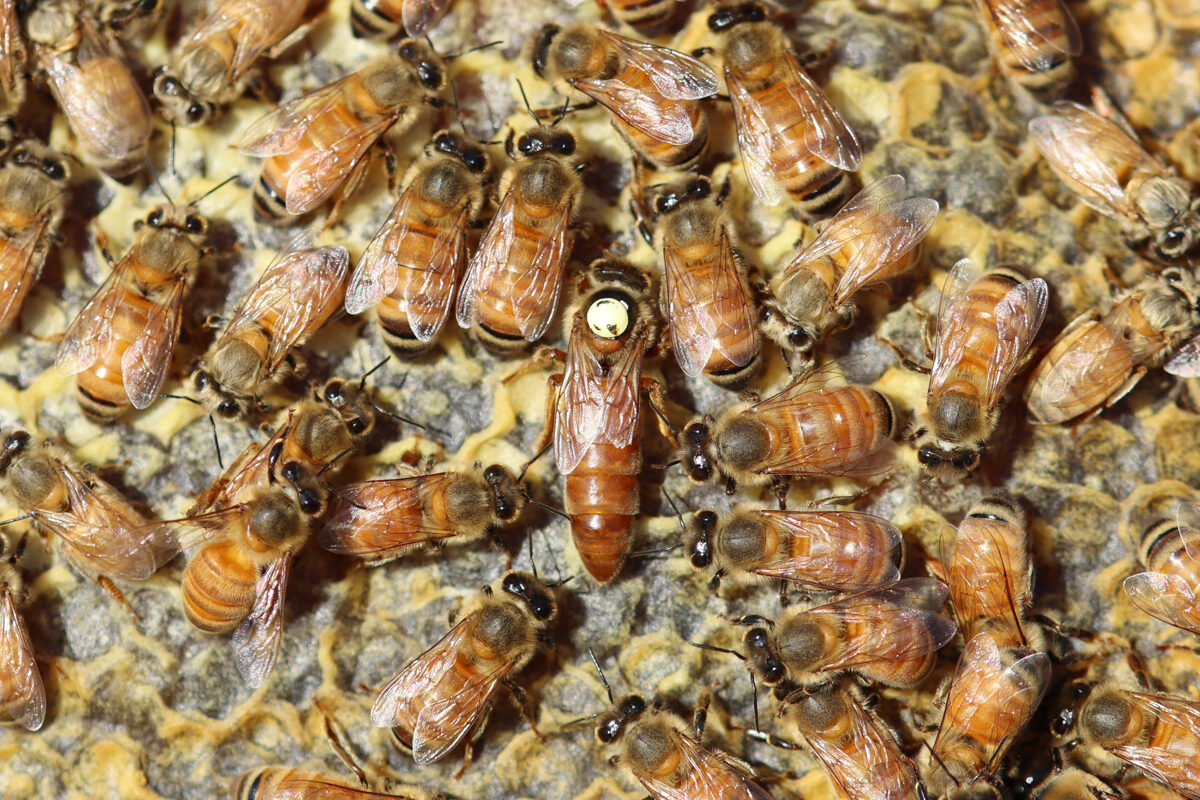
Figure 1.A.m. ligustica — Finnish ligustica worker bees have black striping.
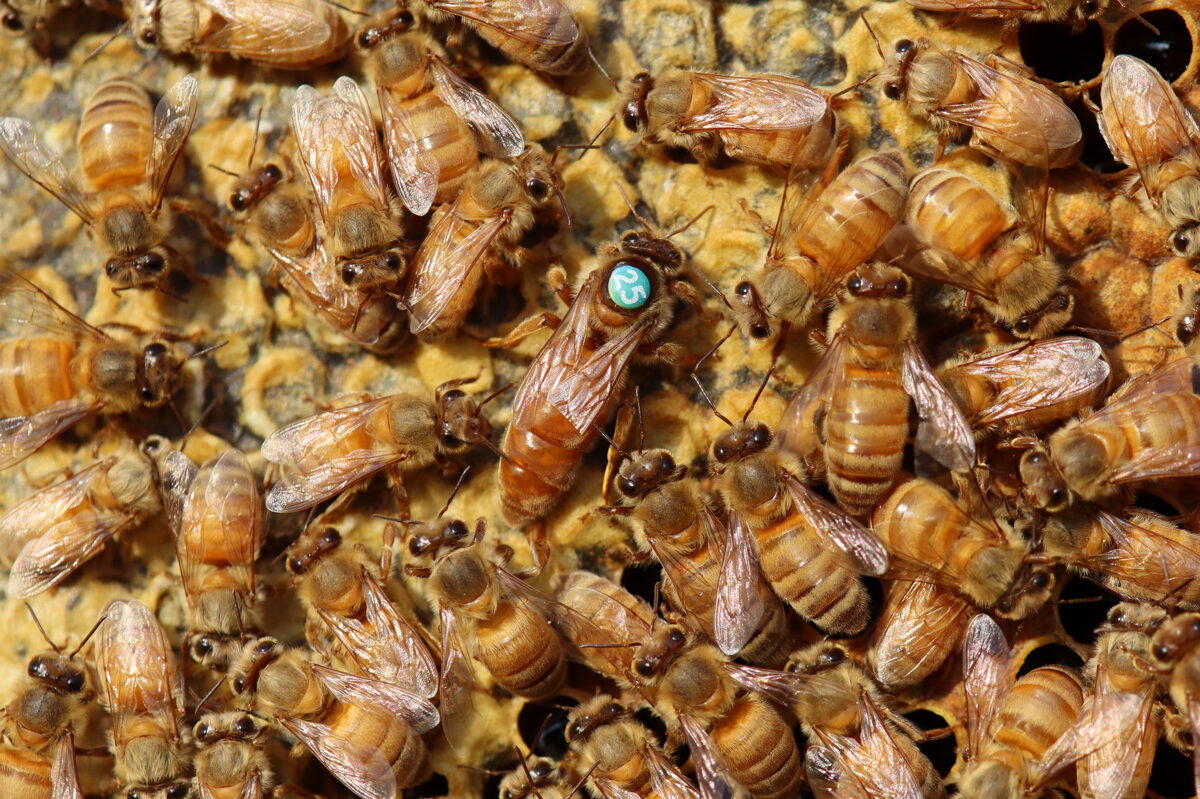
Figure 2.A.m. ligustica — Cordovan ligustica worker bees have brownish-golden striping.
Our path to the Cordovan line has been long, intensive, and has required five years of careful work using instrumental insemination. Only now has this resulted in pure Cordovan selected breeder queens, from which this year we can offer our clients reared virgin and naturally mated Cordovan queen bees.
At first, for Cordovan ligustica selection, we used what seemed to be a logical approach: we crossed the lightest of our own Finnish ligustica queens with the lightest ligustica drones from our other lines, hoping that the Cordovan recessive coloration trait would appear in some of the offspring. We tried this approach for several years, and in total hundreds of instrumentally inseminated queens were produced. Although the colonies obtained and the queens reared from them were very light-colored, productive, and of high quality, they still did not fully correspond to the Cordovan trait — black pigmentation remained present in the worker bees.
When it became clear that this approach alone would not make it possible to establish the Cordovan trait, or that it would require a very long time and thousands of instrumentally inseminated queens, we switched to backcrossing. We had already noticed earlier that in some of our ligustica colonies, individual worker bees matched the Cordovan trait, so we began regularly rearing queens specifically from these colonies, hoping that one of the reared queens would inherit this trait phenotypically as well.
This approach also proved to be very labor-intensive. In practical terms, we could conclude that, from these promising colonies, the Cordovan trait visibly “appeared” in only about 1–2 queen bees out of 1,000 reared queens. In those same colonies, a small proportion of drones, around 5–10%, were also Cordovan drones. A higher proportion among drones is logical, because drones carry only the queen’s genetic material, whereas in worker bees and queens the expression of the trait requires the appropriate combination of alleles from both the queen and the relevant drone. Therefore, Cordovan coloration in worker bees appears only in certain combinations, and in practice it may be encountered very rarely.
It was precisely in this way, by rearing from the promising ligustica colonies, that we obtained our first true Cordovan queen bee in 2024. We instrumentally inseminated her with Cordovan drones from the same colony — that is, according to the principle of backcrossing. Unfortunately, after insemination the colony did not accept this queen, so we ended 2024 without a successful result, but with full determination to continue the search for Cordovan.
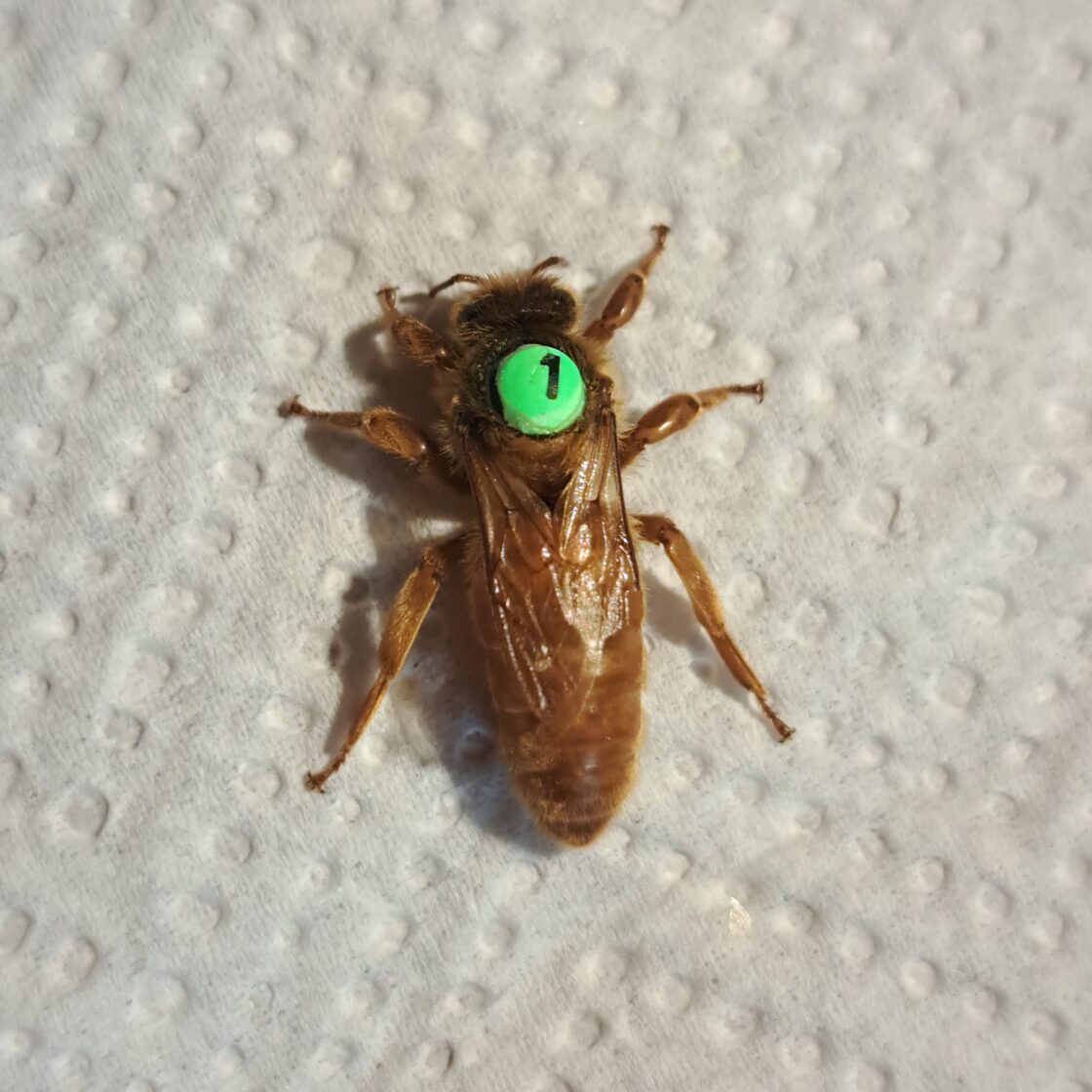
Figure 3. Instrumentally inseminated A.m. ligustica — Cordovan ligustica, 2024.
In 2025, we continued rearing hundreds of queens from the selected ligustica colonies, and this time we obtained two more Cordovan queens, which we again instrumentally inseminated with Cordovan drones. This time, both queens successfully began to lay eggs, and for the first time in our beekeeping experience we were able to observe how the old, black striped bees were gradually replaced by uniform, amber-light bees without black stripes. That was the moment when, for the first time, we truly saw real Cordovan colonies in our apiary.
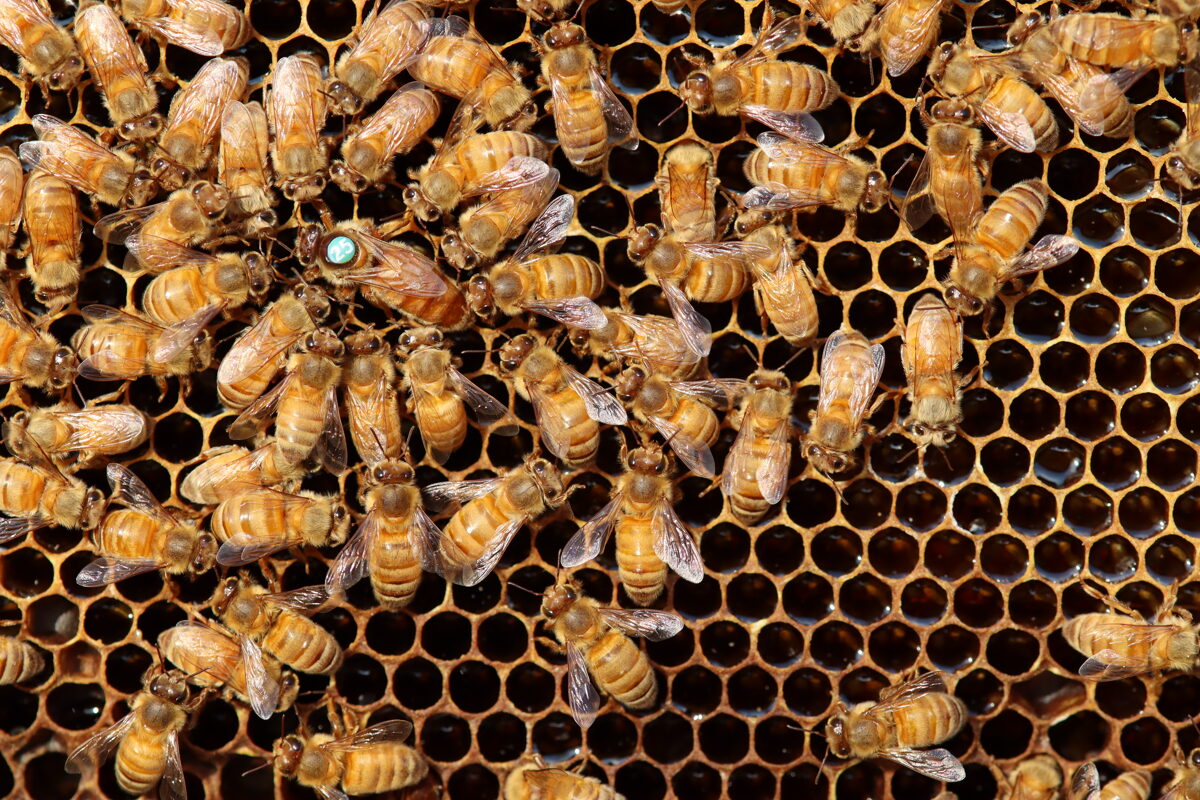
Figure 4.A.m. ligustica — Cordovan ligustica queen bee and worker bees.
The satisfaction from this achievement was enormous. After hundreds of instrumental crosses and thousands of reared queens, we had finally reached the result we had been seeking for several years. Now the queens reared from these colonies are already true Cordovan ligustica.
However, even after this achievement, the work does not end. The next task is to preserve and strengthen these lines for as long as possible. Therefore, from the new instrumentally inseminated Cordovan queens, we reared new queens and allowed them to mate naturally. This allowed us both to preserve the genetic material and, at the same time, to evaluate the traits of these colonies in practice.
Already now, in naturally mated Cordovan queens, it can be observed that the proportion of Cordovan worker bees is significantly higher than in the initial material from which we created the line. Therefore, from these queens, with the help of backcrossing, it will be possible to create new instrumentally inseminated Cordovan selected breeder queens much more easily and quickly. The work will also be made easier by the fact that all drones from these colonies are Cordovan.
When starting Cordovan selection, it was very important to us that we create the Cordovan line specifically from our own material, which had already been tested and adapted to Latvian conditions. And at this point we can conclude that, in terms of colony traits, our Cordovan ligustica do not differ significantly from other good ligustica colonies. They overwintered well through this long and cold winter and are already bringing in the first pollen. Therefore, we can happily say that these colonies bring joy not only with their unusually light appearance, but also with their calm character, good vitality, and convincing development.
What can we conclude more broadly, on the scale of bee breeding work, from this experience of creating a Cordovan line? The first conclusion is that, according to our observations, one generation of backcrossing did not leave a noticeable negative effect on the traits of the colony, and inbreeding depression was not observed at this stage. In addition, backcrossing proves itself in practice as an effective mechanism for restoring and strengthening a line. It allows us to cyclically restore other lines we have developed and which are highly valued among beekeepers in Europe and Latvia — the Carniolan–Carpathian cross KK20 and KK45, Buckfast B25 and B68, as well as other lines.
Of course, backcrossing also has its limitations. It is a labor-intensive method that requires several years of consistent work, careful selection, and precise control of crosses. At the same time, the risk of inbreeding must also be taken into account, as well as the fact that without systematic selection and control, the restoration of a perfectly pure line is not always possible.
Of course, none of this would be possible without instrumental insemination, which is controlled insemination method with the highest reliability. Its versatile application, the quality of queen bees, predictability, and control over crosses are unmatched. Thank you to the Latvian Beekeeping Association for its support in introducing and popularizing this method in Latvia!
We wish everyone a “Cordovan” bright, successful, and inspired 2026 beekeeping season!
Published in the journal "Biškopis," 2nd issue of 2026, by the Latvian Beekeepers Association.
Cart
Cart is empty.